
The future is golf carts

There’s a lot of talk online and in the transportation space in general about micromobility, EVs, and our energy and carbon future. At the moment there’s also a lot of talk about where all of the lithium will come from. We also hear a lot about ped friendly environments and slowing vehicle speeds. There’s a lot of concern about giant, heavy SUVs and the drivers who can’t even see vulnerable road users.
We can try to solve for all of those separately. We can quixotically try to “ban cars” in the suburbs. Or we could try to make most “car” travel unnecessary in the first place.
Golf carts are already popular where I live. Yes, it’s Florida. No, I don’t live anywhere near a golf course. No, I don’t have a cart. Yet.
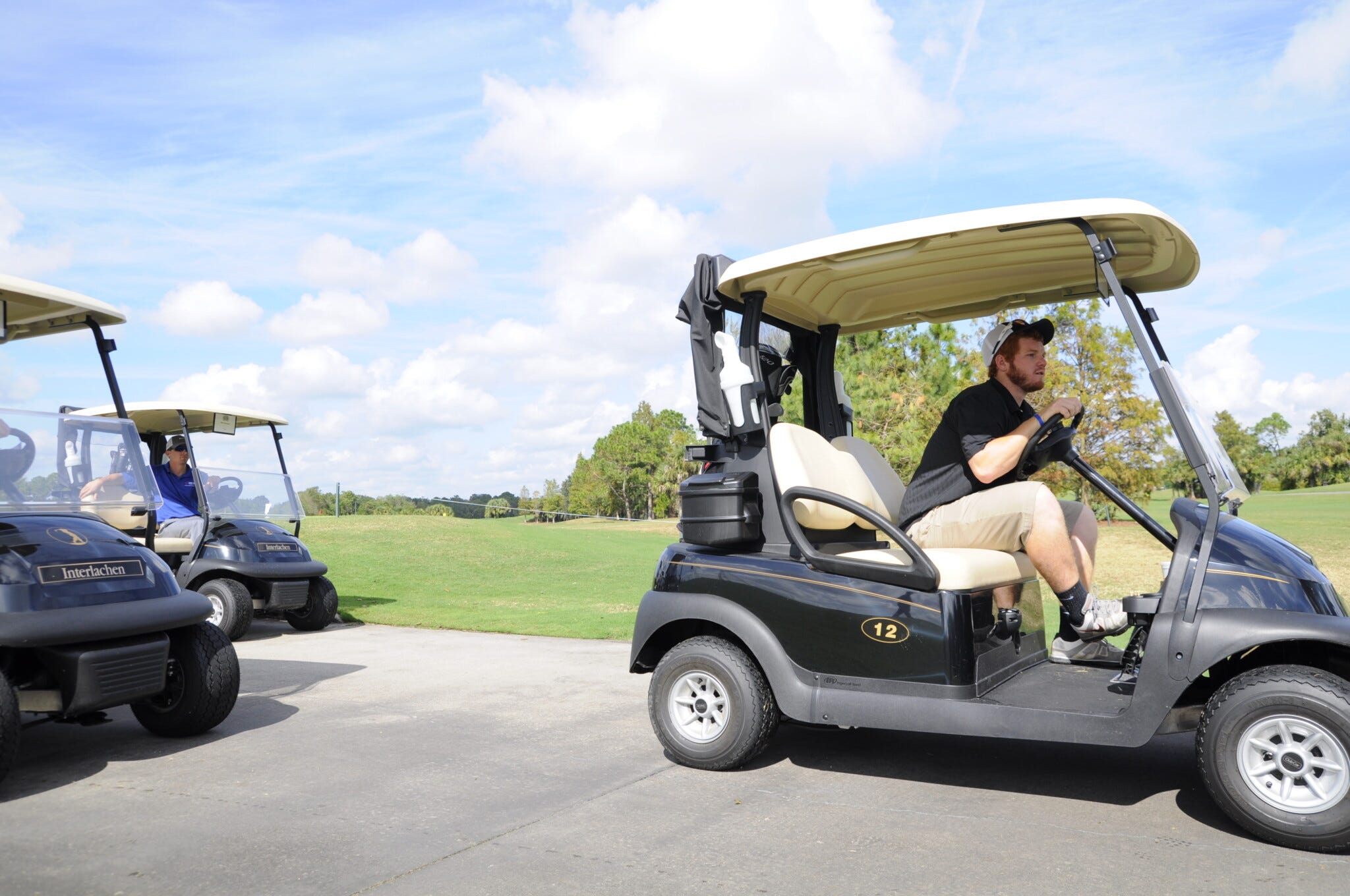
People use them as second “cars” because it’s legal, because they’re cheap to own, and because they’re insanely cheap to operate. There are two different classes of carts. One is an actual golf cart with a top speed of less than 20mph. Since these aren’t required to be registered and don’t have any real safety features they are permitted on public streets only by local ordinance.
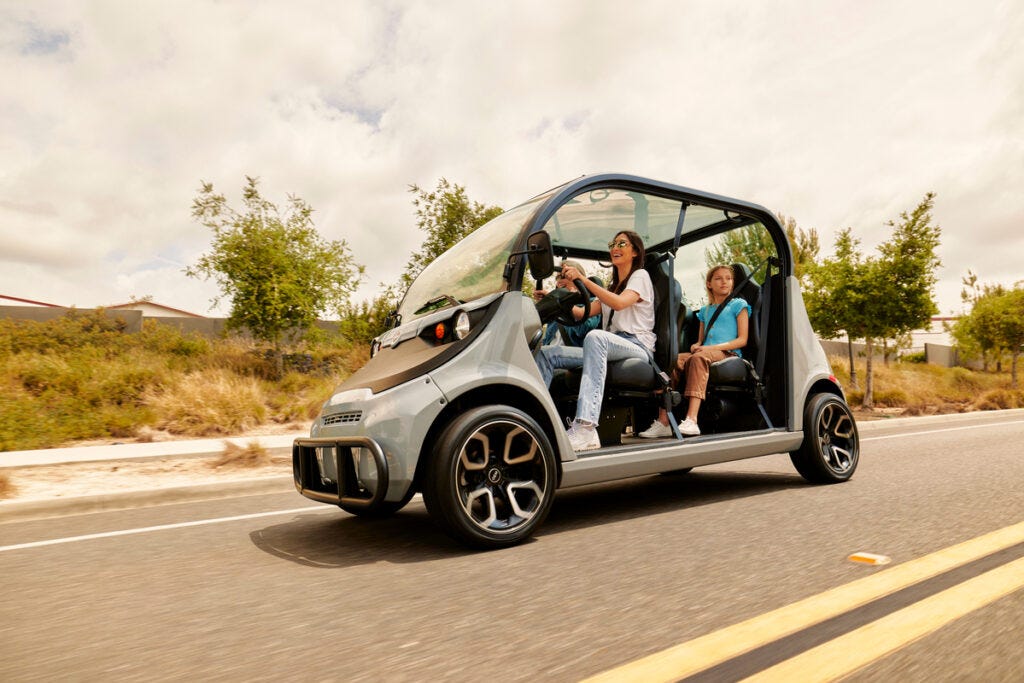
The other is classified as a Low Speed Vehicle (LSV) and has a speed limit of up to 30mph. They come with lights, turn signals, mirrors, seatbelts, etc. and often have stereo systems. If you drive an LSV on public streets you’re required to have it registered and insured and anyone driving it needs to be a licensed driver. They look like this model from GEM:
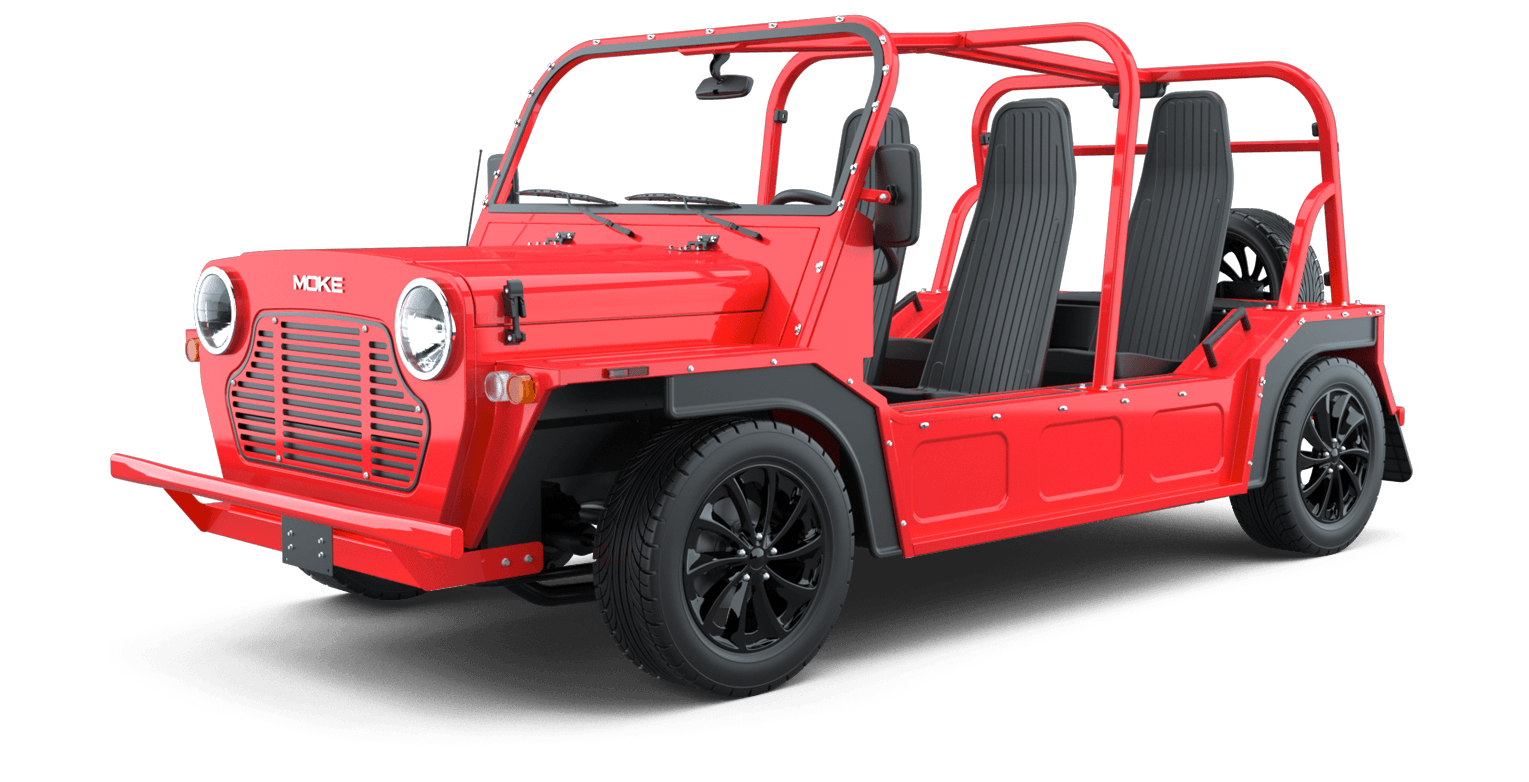
or like this one from MOKE
The rules for LSVs are very similar in New Jersey. The only significant difference being that in NJ LSVs are not allowed on roads where the speed limit is above 25mph while in FL it’s 35mph. In Illinois they’re only allowed where permitted by local ordinance. In California you’re only allowed to have two seater versions.
There are some gas models but most of them are EVs. That GEM model shown above has a range of over 100 miles on a charge, getting a really impressive 8 miles per kWh. As a point of comparison, I have one of the most efficient EVs (a compact car) and I struggle to average 4.4 miles per kWh. Trips around town where I don’t exceed 30mph will typically get me something like 5.8 miles per kWh. For comparison, a Tesla Model 3 is getting around 4 miles per kWh. In an easier to understand sense, the Tesla is getting the equivalent of 135 miles per gallon and the GEM is getting 270 miles per gallon.
My electricity provider uses tiered billing. The first 1,000 kWh costs us $0.10 per kWh, the next 500 costs $0.12. My house is all electric and I’m charging a car so we routinely go into the 2nd tier. If all of my charging is at the top tier then I’m paying something like $0.025 per mile. But a golf cart is way more efficient than my EV. If you were carting around town for the day and managed to rack up 30 miles it would cost, ballpark, about $0.35. If you’re living in a metro area with really expensive electric rates you’re still only talking about $0.70 to go 30 miles. Even if you’re not concerned about the climate, it’s just a lot cheaper to operate, cheaper to insure, and cheaper to maintain.
Most of us don’t drive very far. The average American travels under 4 miles to do their grocery shopping and lives just over 2 miles from the nearest grocery store. We don’t need a 200 horsepower car to go to the supermarket. Some 85% of Americans live within 2 miles of convenience shopping. The average American toddler lives about 4 miles from their daycare. It’s true that a lot of US suburbs suck for walking because everything is so spread out. A lot of them would be perfect for cycling if not for the lack of infrastructure. It will take us 20-30 years to catch up to the Dutch on cycling infrastructure but golf cart infrastructure is right there.
The things for planners to figure out are in creating and signing low speed networks - not just for LSVs but for all low speed users. A lot of our communities already have de facto versions of these but missing connections abound as this map from Dunedin, FL demonstrates:
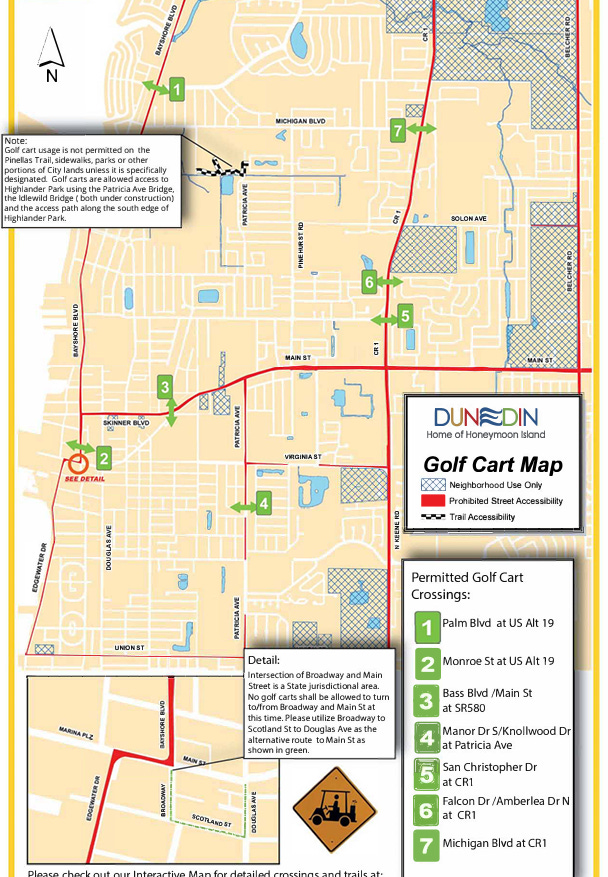
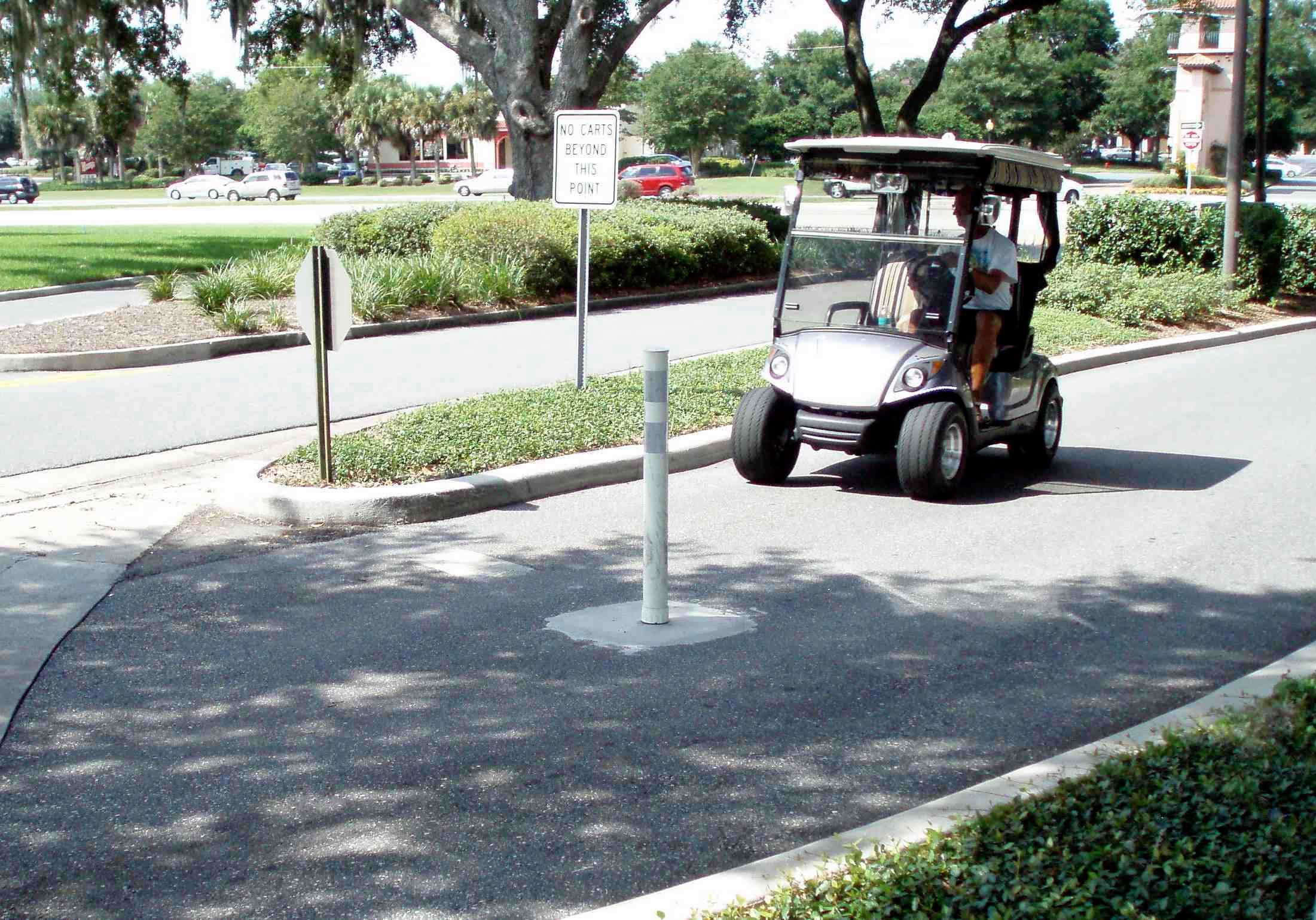
Speed limits may also be mismatched. Lowering the speed limit to 20mph, filling the gaps in the network, and restricting access where necessary make the network safer for all users. A well placed bollard can keep cars out but won’t restrict access to bikes and carts.
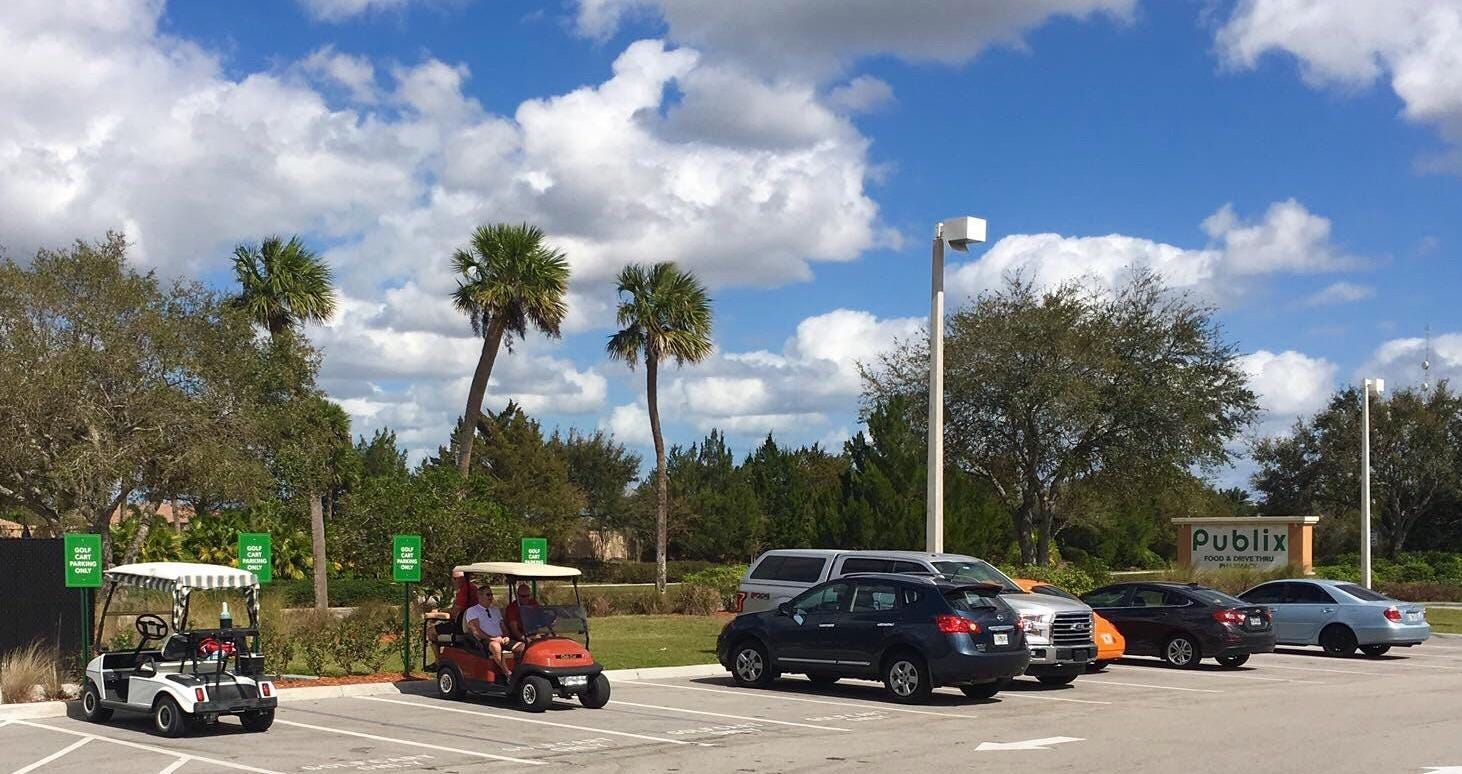
Of course, easier parking would encourage quicker adoption for many households. For 4-seat carts you’re looking at 8 cart-parking spaces replacing every 3 car parking spaces. Again, these spaces are easily restricted with a few well placed bollards and wheel stops. As soon as we establish a network in our city I would immediately move to amend our commercial and multi-family parking standards to allow for 1:1 replacement up to 50%. Even at 40% replacement that’s still a 25% reduction in total parking area.
I know there are places where it gets cold. Thankfully, LSVs are also made with doors and heat. Yes, there are places where it snows. More accurately, there are a lot of places in the US where it snows a few times per year or not at all. 55% of Americans live in the pink and green zones (below). In the green zone snow and ice on the street are a concern a few days to a few weeks per year. In the pink zone those concerns range from entirely irrelevant to only a concern once every few years.
![r/MapPorn - Average Yearly Snowfall in the USA by County [OC] [1513 x 983]](https://substackcdn.com/image/fetch/$s_!rCWP!,f_auto,q_auto:good,fl_progressive:steep/https%3A%2F%2Fsubstack-post-media.s3.amazonaws.com%2Fpublic%2Fimages%2Fce40aaad-125a-4ab9-9f42-c2fa5b8357e2_640x415.png "r/MapPorn - Average Yearly Snowfall in the USA by County [OC] [1513 x 983]")
It’s going to take us decades, realistically the better part of a century, for the ADUs and infill to bring density to the sprawliest of suburban neighborhoods and for our urban form to match our transportation desires. All the while the retail and office footprint will continue to shrink further and further away from where people live. We can move the needle now by enabling and encouraging a transition away from inefficient, gas guzzling, death machines and towards efficient, energy sipping, human scaled transport. We could do both while also bringing the 4 wheels-or-die people along for the ride.